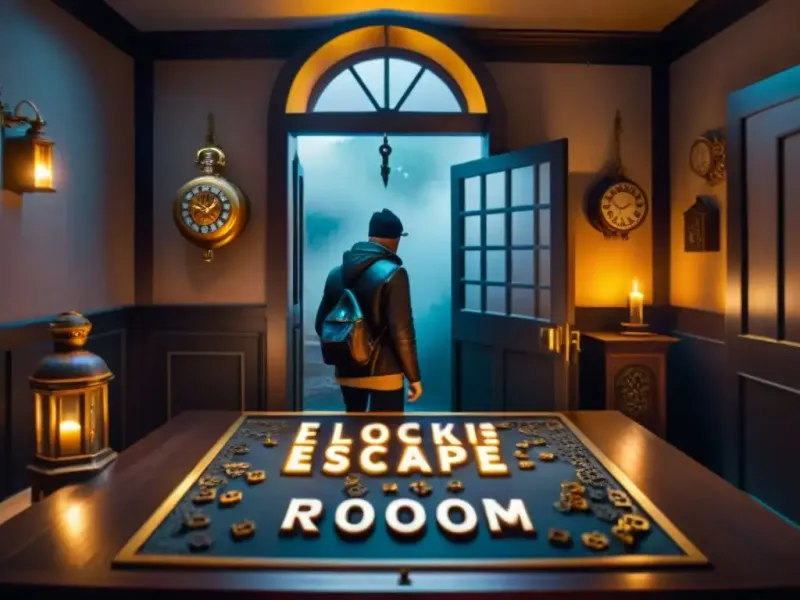
The Room Is Talking: Why a Good Escape Room Soundtrack Is Never Just Background Noise
You clock it about ninety seconds in, or you don't clock it at all — and honestly, the second one is the designer's fault. Somewhere above your head there's a speaker doing quiet, unglamorous work: setting the mood, marking the passage of time, and occasionally handing you the answer while you're busy arguing about whether the brass key goes in the desk or the cabinet.
Sound is the most underrated bit of kit in a UK escape room. Set design gets the photos, the puzzles get the glory, and the game master gets the credit when they nudge you in the right direction. The audio track just sits there, doing three jobs at once, and most teams never give it a second thought until a klaxon goes off and everyone jumps.
Let's fix that.
Three jobs, one soundtrack
Strip away the atmosphere and a room's audio is basically doing this:
Setting the scene. A cellar full of pipes and damp stone sounds different from a 1970s office, and your brain wants that consistency. When the soundscape matches the set, you stop noticing it — which is exactly the point.
Telling the time without a clock. A lot of venues ditch the visible timer and let the audio carry the pressure instead. The music shifts key, a low drone creeps in, a ticking starts somewhere you can't quite place. It's a gentler way of saying 'you've been in this room for forty minutes, maybe stop re-reading the same riddle.'
Steering you without a hint. This is the clever bit. A voice on a radio, a tannoy announcement, a phone that rings at the right moment — all of it can push a stuck team towards the next thread without a game master's voice cutting through the immersion. It feels like part of the story. It is, technically, a hint in a costume.
Room styles where audio does the heavy lifting
If you want to book something where listening genuinely matters, these are the archetypes to look for on booking pages and in reviews.
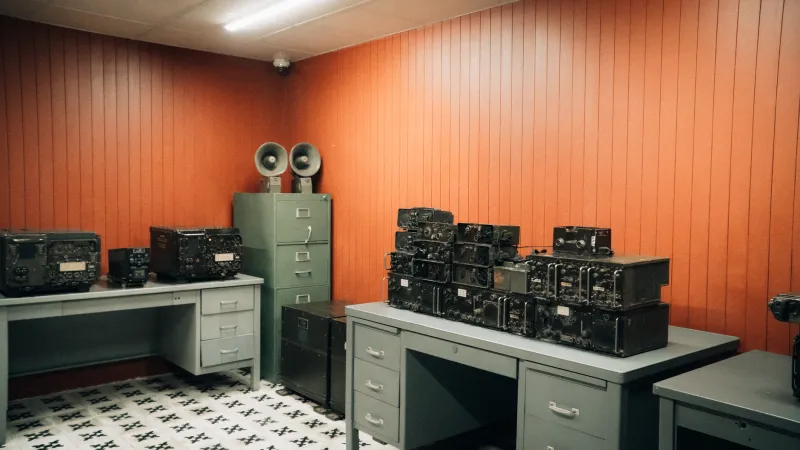
The bunker or submarine room. Klaxons, sonar pings, muffled radio chatter. These rooms use sound to signal state changes — a door unlocking, a system coming online, a lockdown starting. Teams that ignore the noise tend to sit there wondering why nothing's happening. Teams that listen get an audible 'clunk' telling them the console has powered up.
The radio operator setup. You're handed a dial and a headset, and the puzzle is genuinely about finding a frequency. Somewhere in the static there's a voice, and the voice is the clue. Brilliant when it's done well; mildly maddening when the tuning is finicky, so check reviews for the phrase 'fiddly' before you commit.
The paranormal parlour. Whispers, knocks, a music box that starts up on its own. Plenty of UK venues run a ghostly room, and the good ones use directional speakers so the sound seems to come from the corner you're not looking at. Half the puzzle is working out whether the noise is flavour or information.
The music-lock room. A melody is the code, or a sequence of notes unlocks a cabinet. These rooms reward anyone in the group who did Grade 3 piano before giving up, and punish everyone else until somebody starts humming.
The countdown that lies. A timer that speeds up audibly, a metronome that changes tempo, an alarm that starts earlier than the clock suggests. Slightly cruel, very effective, and a great reason to keep half an ear free.
When the audio is the puzzle
A handful of rooms go further and make sound the mechanism rather than the mood. Clues reversed and played back, layered tracks where you have to isolate one voice, a low hum you need to match on a dial, instructions delivered only through a crackly recording.
These are memorable rooms, but they come with a warning worth taking seriously: not everyone hears equally well. If anyone in your group is deaf or hard of hearing, or struggles in a room with a lot of background noise, email the venue before booking. Good operators will tell you honestly whether the room works with a transcript, a visual equivalent for audio cues, or a game master who'll flash the lights instead of sounding a bell. The best ones have thought about this already. If the reply is a vague 'it'll be fine', believe that too.
Why your team stops listening by minute fifteen
Here's the annoying truth: most groups switch off the soundtrack almost immediately, then wonder why a room felt thin. Blame the chaos. Six people talking over each other, a padlock being rattled, someone reading a clue aloud in a monotone — the audio never stands a chance.
A few things that help:
- Give someone the ears job. Not forever, but for the first five minutes. One person's role is to notice changes in music, voiceovers and odd noises, and to say them out loud.
- Go quiet after every cue. If a voice comes over a speaker, stop talking for ten seconds and let it finish. Half of all missed clues are missed because three people were mid-argument.
- Treat a music change as an event. If the background shifts, something in the room has changed. Check the thing you just touched.
- Don't shout over it. If you genuinely can't hear, ask the game master to adjust the volume — most rooms have a control for exactly this, and nobody will think less of you.
- Note the timings. 'The beeping started just after we opened the chest' is a genuinely useful sentence in a debrief, and it's the kind of pattern most teams only spot afterwards.
The cheapest hint in the building
One last thing worth knowing, because it changes how you play: audio is the easiest way for a game master to help you without breaking character. No disembodied voice, no screen popping up — just a phone that suddenly rings, or a radio that crackles into life with a name you hadn't considered yet.
Which means the room is often talking to you long before you think it is. Next time you book, spend the first two minutes standing still and listening instead of diving straight for the nearest drawer. You'll be surprised how much of the hour the soundtrack has already planned out for you.
And if you come out saying 'the music was really good in there', congratulations — you noticed the one thing the designers hoped you'd feel rather than hear.