Who Does What Before the Clock Starts: A Sane Role Plan for Escape Rooms

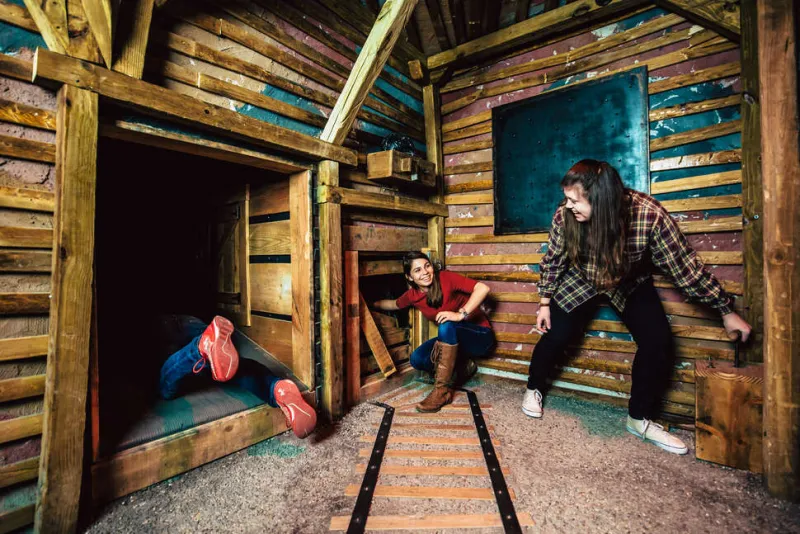
Photo: friends solving escape room puzzle together UK, via static0.srcdn.com
Escape rooms are brilliant fun, but let’s be honest: they’re also a small group project with a door. Most teams pile in, someone grabs the nearest padlock, someone else starts reading every poster aloud, and the loudest person quietly becomes the boss. That can still work. It can also leave half the group standing around like extras in a heist film while one person solves everything.
A quick role chat before the timer starts won’t drain the fun. It just gives everyone a way in. These aren’t formal jobs with lanyards and performance reviews — more like flexible hats you can swap as the room unfolds.
Why a little structure helps
Escape rooms reward two things: noticing details and sharing them clearly. Roles make both easier. They also stop the classic pattern where one confident player hoovers up every clue while a quieter teammate spots the answer but never gets a word in.
You don’t need a laminated team sheet. A 60-second huddle in reception is plenty. Try: “What do you fancy starting on — locks, searching, notes or keeping us on track?” It’s low-pressure, it gives first-timers a job, and it avoids the awkward moment where everyone pretends they’re not bothered.
The five useful hats
The Locksmith
This person is the first port of call for padlocks, keypads and anything that goes click. They don’t have to solve every lock themselves. Their job is to keep track of what’s been tried, which codes failed, and which locks are still sulking in the corner.
A good locksmith says: “We’ve tried 4-8-1-2 on the brass padlock twice. Nobody repeat it.” That one sentence saves five minutes of collective déjà vu.
The Scanner
Some people are naturally brilliant at spotting patterns: repeated symbols, tiny numbers on picture frames, arrows that point somewhere useful. The scanner’s job is to look properly rather than frantically. They read the room’s visual language and call out anything that feels like a clue.
The trick is to share discoveries, not hog them. “There’s a four-digit number under the plant pot” is useful. Silently memorising it and wandering off is less useful.
The Note-Taker
Every escape room has a moment where someone says, “What was that code from the book?” and the room goes silent. A note-taker prevents that. They jot down codes, symbols, failed combinations and half-finished theories on paper or a phone note if the venue allows it.
This is a great role for someone who likes being organised but doesn’t want to be in the thick of every puzzle. It’s also excellent for mixed-age groups — a younger player can be chief scribe and feel genuinely useful.
The Timekeeper
This isn’t about barking “Seven minutes left!” like a stressed PE teacher. The timekeeper watches the clock and the team’s energy. If you’ve spent twelve minutes on one drawer while three other leads are sitting untouched, they call it.
They also keep an eye on hint use. If you’ve agreed to save hints until the last ten minutes, the timekeeper is the one who remembers that when everyone else is panic-Googling the venue’s terms and conditions.
The Communicator
This is the hub, not the boss. The communicator makes sure discoveries are shared, questions are answered and nobody is quietly stuck. They might say, “Right, what have we got?” every few minutes, or “Has anyone checked the other side of that door?”
Crucially, the communicator should be someone who listens as much as they talk. If the same person always ends up with this role, rotate it next time. A team that only works when one person is steering isn’t really a team — it’s a puppet show with padlocks.
Handling the dominant player
Every escape room group has one: the person who solves the first puzzle, then decides they must solve all the others before anyone else has read the clue. They’re not evil. They’re excited.
Try a gentle bit of pre-room framing: “Let’s make sure we all get a go — if you solve something, shout what you’ve found rather than just doing it.” During the game, the communicator can redirect: “Nice one. Can you explain that to the group so we’re all on the same page?”
If it’s still turning into a one-person show, use the roles. Ask the dominant player to take notes for a few minutes or talk the team through the next step. Sometimes the fastest way to calm a solver is to give them a job that isn’t “solve everything”.
Mixed-age groups and first-timers
For families, give younger players real jobs: scanner, note-taker, official button-presser. For first-timers, pair them with someone patient and agree that nobody gets mocked for asking what a padlock code even is. For work teams, don’t turn it into an Apprentice task. The point is a good hour out, not a personality test.
A quick pre-room ritual helps: everyone says one thing they’re good at — spotting details, reading maps, keeping calm, doing maths, being tall enough to reach the top shelf. It sounds daft, but it gives people permission to contribute.
The debrief that makes it worthwhile
On the way out, ask three questions: What worked well? Where did we get stuck as a group? What would we do differently next time? That’s it. No flip chart required.
Do that and an escape room stops being just a fun hour. It becomes the rare day out where everyone actually got to play.